
A Brief History of Zwanze Day

Belgian Beer Cafe Melbourne is truly honoured to be hosting Zwanze Day once again. Before the big day arrives on April 25th, we thought it opportune to help those looking to swot up on a potted history of this monumental event. Welcome to Zwanze Day 101.
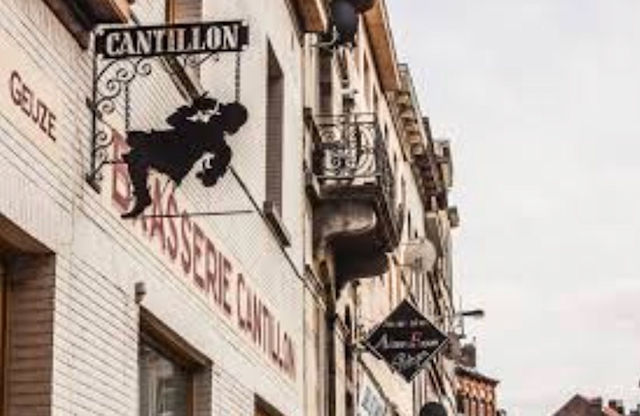
Zwanze Day, is the annual global celebration of experimental lambic beers from Belgium’s famous Brasserie Cantillon. It embodies a unique blend of brewing tradition, innovation, and communal spirit. To understand its essence, one must first grasp the word “zwanze” itself, a term deeply rooted in Brussels dialect that often eludes even native Belgians due to its nuanced, multifaceted nature. Derived from the Dutch “zwans” or French “zwanze,” it traces etymologically to the German “Schwanz,” meaning “tail” but colloquially referring to male genitalia, evoking notions of foolishness or ribald jest. In Brussels culture, zwanze represents a mocking, Rabelaisian humour characterized by farce, exaggeration, mystification, and self-deprecation, delivered with deadpan solemnity. It blends Flemish dialects with French in absurd linguistic twists, appearing spontaneously in everyday banter, market cries, or street wit, requiring insider knowledge of local idioms to fully appreciate. Often semi-sarcastic or playful kidding, zwanze mirrors Brussels’ identity—irreverent yet endearing, much like icons such as Manneken Pis or the Grand-Place. This humorous ethos infuses Cantillon’s Zwanze beers, which poke fun at brewing conventions through whimsical ingredients.

The history of Zwanze Day begins in 2008, when Cantillon’s brewmaster Jean Van Roy released the first Zwanze beer: a lambic infused with rhubarb, bottled and distributed across Europe and North America without fanfare. This marked the start of an annual series celebrating experimental, small-batch creations that deviated from traditional lambics, embracing the “zwanze” spirit of jest. The 2009 edition featured elderflower (later becoming the regular Mamouche), while 2010 ventured beyond lambic with a spontaneously fermented witbier. However, these early releases faced commoditization issues, with bottles reselling on black markets like eBay for exorbitant prices—up to 50 times retail—prompting Van Roy to rethink distribution.
In 2011, Zwanze evolved into a full-fledged event: International Zwanze Day, with simultaneous keg tappings at select bars worldwide on September 17. This shift emphasized on-site consumption to combat flipping, with two-thirds of production kegged for parties featuring the 2011 beer: lambic with Pineau d’Aunis grapes. The format stabilized in subsequent years, alternating dates (often April or September) and expanding globally from initial spots in Europe and the U.S. to over 60-90 locations by the mid-2010s, including Asia, Australia, and South America. Key releases highlighted creativity: 2013’s abbey-style ale blended with lambic, 2015’s spontaneously fermented stout, 2016’s raspberry lambic with blueberries and vanilla, and 2019’s smoked malt lambic. Challenges like the 2020 COVID-19 pandemic limited it to Europe (beetroot lambic), but it rebounded in 2021 with a citrus blend inspired by 1950s experiments.
BBC hosted Zwanze Day in 2014, the very first time Zwanze Day visited the Australian continent. That beer, Cuvée Florian was a unique blend created by Jean Van Roy and named after his son, Florian. It combined the following:- two-year old lambic- Cantillon Iris (Cantillon’s rare 100% pale-malt “brut” lambic, normally still and heavily fresh-hopped), and a lighter dose of cherries (about 40% less fruit than a standard Kriek). The result was a deep blood-red pour with a pinkish head, massive fresh-cherry aroma, pronounced hop bitterness, herbal/medicinal notes (almost eucalyptus-like), tart acidity, and a dry, vinous finish. Many described it as a “hopped-up Kriek” or a bridge between Cantillon’s classic fruit lambics and the floral intensity of Iris.
By 2024, Zwanze Day had grown into a cultural phenomenon, with beers like the seaweed-infused edition fostering global toasts and charitable ties, such as 2022’s black pepper lambic benefiting gorilla conservation. In 2026, it features dual vermouth-blended releases, underscoring Van Roy’s vision of accessibility and innovation amid craft beer’s commercialization.
Ultimately, Zwanze Day isn’t supposed to be just about the beer but rather the channelling of Brussels’ zwanze humour to unite enthusiasts in a shared, irreverent ritual.



My Perfect Hotel is my go-to game whenever I want to unwind.
Tiny fishing is the perfect game to play when you just want to chill and turn your brain off for a bit.
Level Devil has become my benchmark for clever game design on a small scale.